
Do Not Baseline To
Clean bare steel
Laboratory-style clean surface conditions are not representative of routine mill handling.
Layer 3 · Application Article · PSC Hand Safety
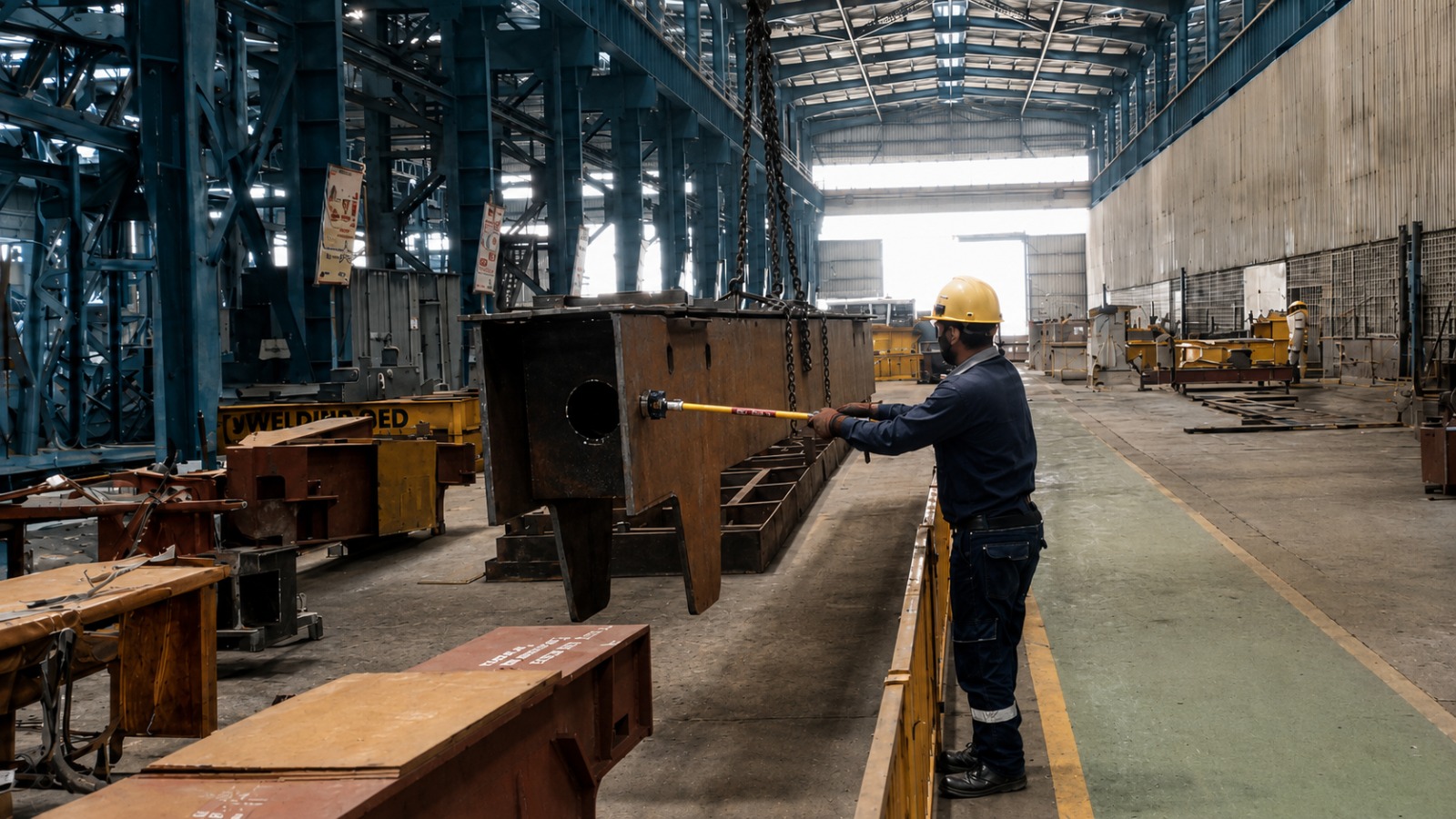
Steel mills present the full range of ferrous load handling challenges: heavy loads, high-temperature surfaces, repetitive cycles, and environments where mill scale and surface contamination are the norm.

Process Heat Considerations
The steel mill environment differs from most other industrial settings in the combination of load mass, process heat, and cycle frequency. Coils, plates, and billets may be handled continuously across a shift, in environments where surface temperatures may be elevated and surface conditions are rarely clean bare steel.
Steel that has recently been processed — rolled, cut, or heat-treated — may retain significant surface temperature. Permanent magnets lose holding strength as temperature rises.
In steel mill applications involving hot or recently processed material, verify that the work surface temperature is within the specific tool's rated operating range before use. Do not assume the published holding force rating applies to elevated-temperature surfaces.
Use the specific tool's rated operating limit as the decision point before magnetic engagement with recently processed material.
Mill Scale as the Baseline Condition
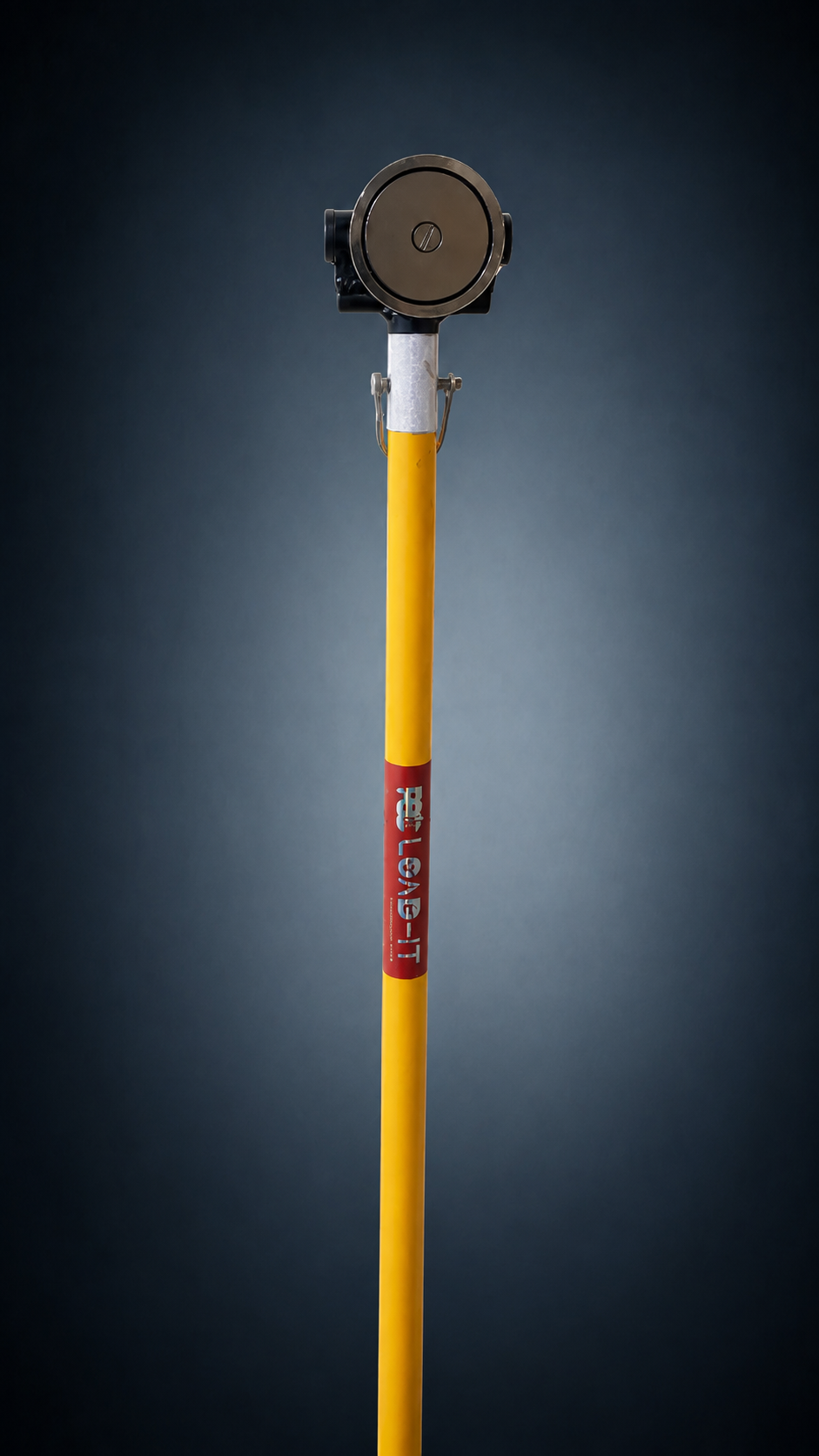
As-rolled structural steel and plate stock carries mill scale as its standard surface condition.
Mill scale reduces magnetic attachment quality compared with clean bare steel. Engineers selecting magnetic guidance tools for steel mill coil and plate handling should treat the thick-coating/mill-scale surface condition band as the realistic baseline — not clean bare steel.
Laboratory-style clean surface conditions are not representative of routine mill handling.
Selection should reflect the actual surface condition routinely encountered in the mill.
Application · Coil Transfer
Guiding steel coils between processing stations, storage positions, and loading bays involves steering a cylindrical load that presents a curved surface to the magnetic head.
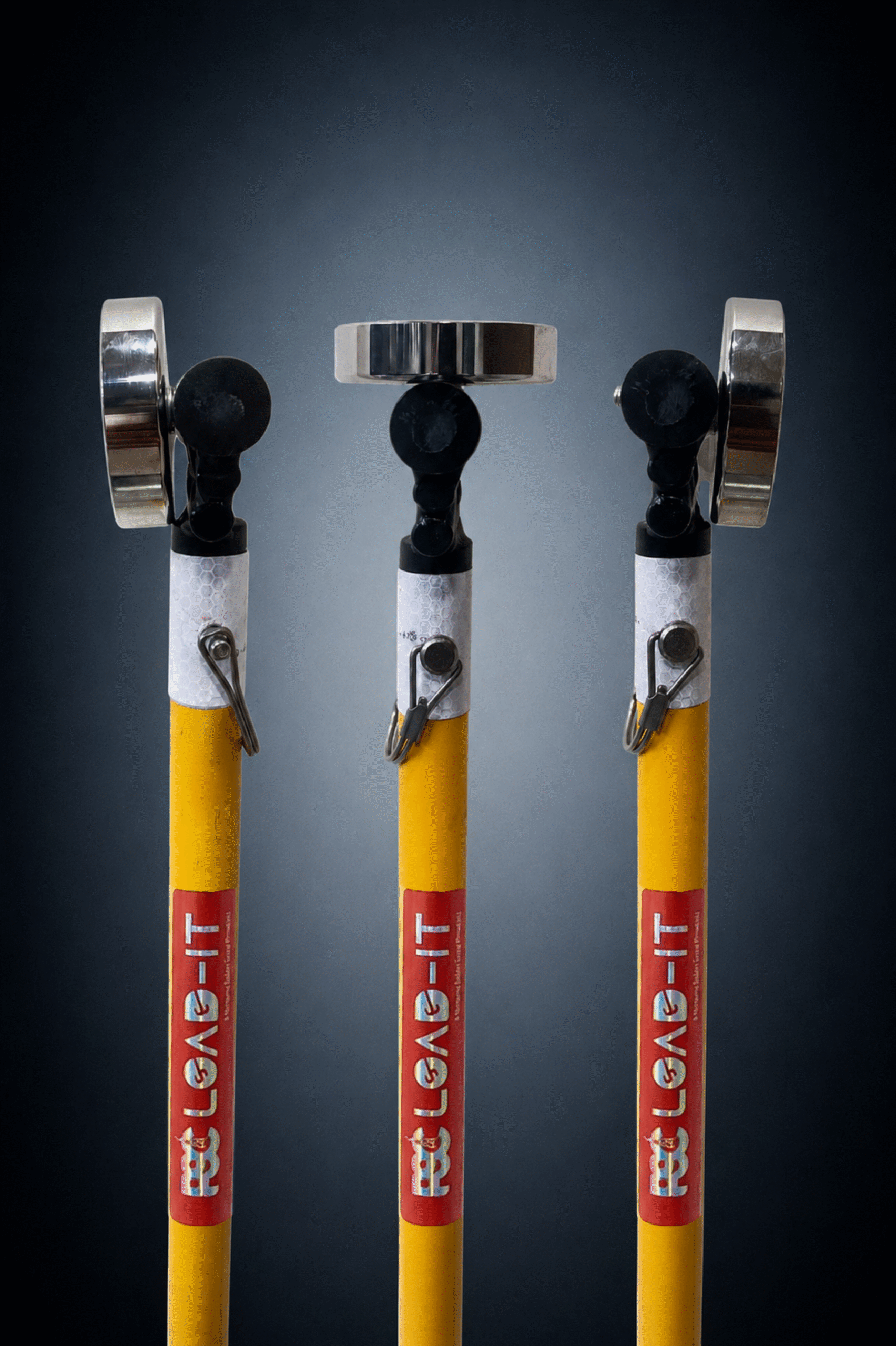
The 180° Swivel Head's free magnetic face rotation allows the head to maintain contact on gently curved coil faces as the operator's position changes around the load.
The surface presented to the magnetic head is gently curved rather than flat.
Free magnetic-face rotation supports contact as the operator moves around the load.
Guidance may continue while the operator's relative position around the coil changes.
Application · Plate Rack Guidance
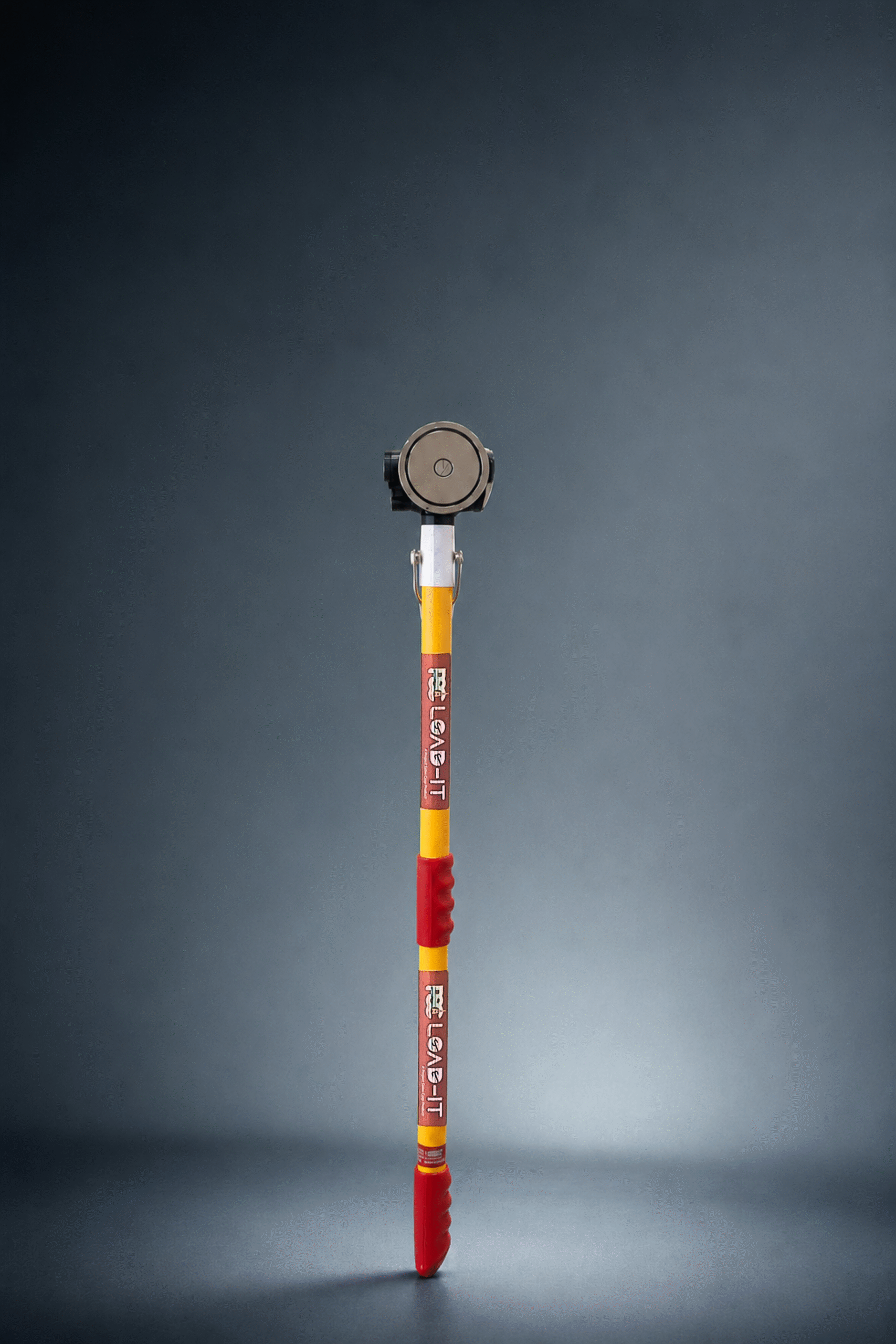
Guiding processed plate onto storage racks in mill operations follows the same engineering logic as service centre rack guidance — 90° Flex Head, 2–3 ft reach, operator positioned beside the rack opening rather than inside the closing gap between plate and rack structure.
Matched to predictable rack-entry geometry.
Short working distance for precise rack guidance.
Not inside the closing gap between the plate and rack structure.
Elevated temperature surfaces require verification against the specific tool's rated operating limit before magnetic tool engagement. Do not use on surfaces that exceed the tool's rated operating temperature — confirm the limit from the tool's magnet grade specification.
Related Engineering Resources
Review the MagHead system, selection logic, magnetic-force engineering and the wider hands-free ferrous-load guidance framework.
Premium Engineering Consultation
PSC's Application Mapping Review examines the actual task — the load, the surface, the access conditions, and the operator's movement — and recommends the correct matched configuration.